
- What causes psoriasis?
- How is psoriasis treated?
- Is psoriasis an autoimmune disease?
- What triggers psoriasis flare-ups?
- Are topical steroids safe for psoriasis?
- Why are oral steroids contraindicated in psoriasis?
- What are biologics for psoriasis?
- What are biosimilars in psoriasis treatment?
- Are JAK inhibitors effective for psoriasis?
- Who is the best dermatologist for psoriasis treatment?
- Where can I get psoriasis treatment by Dr. Sommiya Anum
What Is Psoriasis?
Is Psoriasis an Autoimmune Disease?
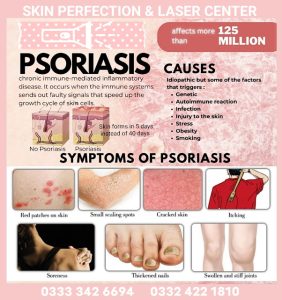
Psoriasis is a chronic immune-mediated inflammatory skin disease that accelerates the growth cycle of skin cells, causing thick, red, scaly patches that may itch, crack, or bleed. Although psoriasis is not contagious, it is a lifelong condition that can significantly affect physical health, emotional well-being, and quality of life.
Healthy skin cells normally renew every 28–30 days, but in people with psoriasis, this process occurs within 3–7 days. The rapid buildup of skin cells results in raised plaques covered with silvery-white scales, commonly affecting the scalp, elbows, knees, lower back, hands, and feet
Psoriasis affects millions of people worldwide and may occur at any age. While there is currently no permanent cure, modern dermatology offers highly effective treatments that help control symptoms, reduce flare-ups, and improve long-term skin health.
What Causes Psoriasis?
Psoriasis develops due to a combination of genetic predisposition, immune system dysfunction, and environmental triggers. In susceptible individuals, immune cells become overactive and release inflammatory proteins such as TNF-α, IL-17, and IL-23, which speed up skin cell production and lead to chronic inflammation.
Common contributing factors include:
Family history of psoriasis
Psoriasis Causes
Autoimmune immune response
Emotional stress
Hormonal changes
Certain medications
Obesity
Smoking
Excessive alcohol consumption
Skin injuries and infections
Common Psoriasis Triggers
Understanding personal triggers is essential for preventing flare-ups.
Psoriasis Causes and Treatment
The most common psoriasis triggers include:
Emotional stress and anxiety
Cold and dry weather
Skin injury (Koebner phenomenon)
Streptococcal throat infections
Viral illnesses
Smoking
Alcohol intake
Obesity
Lack of sleep
Certain medications such as lithium, beta-blockers, and antimalarials
Sudden withdrawal of corticosteroids
Psoriasis Causes
Avoiding known triggers can reduce the frequency and severity of psoriasis outbreaks.
Signs and Symptoms of Psoriasis When Should You Visit a Dermatologist?
Psoriasis symptoms vary from person to person depending on disease severity and type.
Common symptoms include:
Thick red plaques
Silvery-white scales
Dry, cracked skin
Persistent itching
Burning sensation
Painful fissures
Bleeding after scratching
Nail pitting and thickening
Scalp scaling
Temporary hair shedding due to scalp inflammation
Some patients also develop psoriatic arthritis, which causes joint pain, swelling, and stiffness
Psoriasis Causes and Treatment
Daily Precautions for Patients with Psoriasis
Daily skin care and healthy lifestyle habits play an important role in controlling psoriasis.
Dermatologists recommend:
Moisturize your skin at least twice daily.
Use fragrance-free moisturizers.
Avoid harsh soaps and detergents.
Take short lukewarm showers instead of hot baths.
Wear soft cotton clothing.
Avoid scratching affected skin.
Protect your skin from injuries and sunburn.
Maintain a healthy weight.
Psoriasis Causes
Exercise regularly.
Manage stress through meditation or relaxation techniques.
Stop smoking.
Limit alcohol consumption.
Follow your dermatologist’s treatment plan consistently.
Recommended Skincare Routine for Psoriasis
A dermatologist-approved skincare routine helps maintain the skin barrier and reduces flare-ups.
Morning Routine
Gentle cleanser
Ceramide-rich moisturizer
Sunscreen SPF 30–50
Night Routine
Gentle cleansing
Prescription topical medication
Thick moisturizer
Psoriasis Causes
Scalp Care
Patients with scalp psoriasis should use:
Medicated shampoo
Psoriasis Causes
Prescription scalp lotion or solution
Gentle massage without scratching
Are Topical Steroids Safe?
Yes. Topical corticosteroids remain one of the most effective first-line treatments for psoriasis when prescribed appropriately by a dermatologist.
Benefits include:
Reduced redness
Relief from itching
Decreased inflammation
Reduced scaling
Long-term misuse may lead to skin thinning, stretch marks, and visible blood vessels. Therefore, treatment should always be supervised by a qualified dermatologist.
Why Are Oral Steroids Contraindicated?
Unlike topical steroids, oral corticosteroids are generally avoided in psoriasis because discontinuing them may trigger severe rebound flare-ups, including generalized pustular psoriasis and erythrodermic psoriasis.
Safer long-term treatment options are preferred for disease control.
Affordable Treatment Options
Many patients achieve excellent disease control without expensive medications.
Common treatment options include:
Topical corticosteroids
Vitamin D analogues (Calcipotriol)
Salicylic acid preparations
Coal tar therapy
Calcineurin inhibitors
Narrowband UVB phototherapy
Methotrexate
Cyclosporine
Acitretin
Treatment depends on disease severity, affected body surface area, and overall health.
Latest Immunomodulators and Advanced Therapies
Modern psoriasis treatment targets the immune pathways responsible for inflammation.
Biologics target inflammatory proteins such as:
TNF-α
IL-17
IL-23
IL-12/23
These medicines provide excellent skin clearance in patients with moderate-to-severe psoriasis.
Biosimilars
Biosimilars offer effectiveness and safety comparable to biologic medicines while improving affordability.
JAK Kinase Inhibitors
Janus Kinase (JAK) inhibitors are newer targeted oral therapies that block inflammatory signaling inside immune cells. They may be appropriate for selected patients after careful evaluation and monitoring by a dermatologist.
Psoriasis Causes
When Should You See a Dermatologist?
Consult a dermatologist if:
Your psoriasis continues to spread.
Home treatments are ineffective.
You develop severe itching or pain.
Your nails become affected.
You experience joint pain or swelling.
Psoriasis impacts your confidence or daily activities.
Psoriasis Causes
Early diagnosis and personalized treatment can help prevent complications and improve long-term outcomes.
Why Choose Skin Perfection & Laser Center?
At Skin Perfection & Laser Center, Dr. Sommiya Anum provides personalized, evidence-based care for psoriasis. Every treatment plan is tailored to the patient’s condition and may include topical therapies, phototherapy, systemic medications, biologics, biosimilars, or advanced immunomodulatory treatments.
Our goal is to help patients achieve healthier skin, reduce flare-ups, and improve their quality of life through comprehensive dermatologic care.
Frequently Asked Questions (FAQs)
Is psoriasis contagious?
No. Psoriasis cannot spread through touch or close contact.
Can psoriasis be cured permanently?
There is currently no permanent cure, but modern treatments can provide long-term control and remission.
Does stress worsen psoriasis?
Yes. Emotional stress is one of the most common triggers for psoriasis flare-ups.
Are biologics safe?
Biologic medicines are highly effective for many patients with moderate-to-severe psoriasis and should be prescribed and monitored by a qualified dermatologist.
What is the best moisturizer for psoriasis?
Fragrance-free, ceramide-based moisturizers and thick emollients help protect the skin barrier and reduce dryness.
Psoriasis Treatment in Pakistan
Best Psoriasis Specialist
Psoriasis Clinic
Psoriasis Treatment Faisalabad
Skin Perfection & Laser Center
Dr. Sommiya Anum
Psoriasis Causes
Plaque Psoriasis Treatment
Scalp Psoriasis Treatment
Autoimmune Skin Disease Treatment
Disclaimer: This article is for educational purposes only and should not replace professional medical advice. Always consult a qualified dermatologist for diagnosis and personalized treatment.