
1. The Mirror’s Reflection:
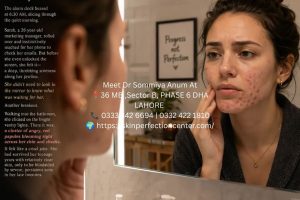
The alarm clock buzzed at 6:30 AM, slicing through the quiet morning. Sarah, a 28-year-old marketing manager, rolled over and instinctively reached for her phone to check her emails. But before she even unlocked the screen, she felt ita deep, throbbing soreness along her jawline.
She didn’t need to look in the mirror to know what was waiting for her. Another breakout.
Walking into the bathroom, she clicked on the bright vanity lights. There it was: a cluster of angry, red papules blooming right across her chin and cheeks. It felt like a cruel joke. She had survived her teenage years with relatively clear skin, only to be blindsided by severe, persistent acne in her late twenties.
Sarah spent the next twenty minutes meticulously applying concealer, trying to mask the inflammation. Her hands trembled slightly as she blended the edges. It wasn’t just about the bumps; it was the psychological weight of it all. Tonight was a major client dinner, and instead of focusing on her presentation, she was mentally calculating how many times she would need to excuse herself to the restroom to check if her makeup had caked or faded.
She thought back to the countless products lining her bathroom shelf—the harsh salicylic acid washes that left her skin peeling, the tea tree oil that smelled medicinal, and the expensive serums that promised miracles but delivered nothing. Each new breakout felt like a failure, a tangible mark of her inability to get her own biology under control.
As she walked out the door, she pulled her hair forward slightly to frame her face, a protective curtain against the world. She felt like she was constantly performing, trying to project competence and poise while feeling utterly defeated by her own reflection.
Sarah’s story is not unique. For millions of adults, acne is not a temporary phase of adolescence; it is a chronic, exhausting companion that shapes daily choices, dictates social comfort, and silently erodes self-esteem.A Story of Resilience ]
2. What is Acne? The Medical Reality
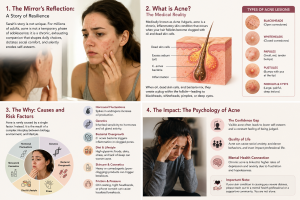
To fight acne effectively, we must first demystify it. Medically known as Acne Vulgaris, acne is a chronic, inflammatory skin condition that occurs when your hair follicles become clogged with oil and dead skin cells.
Your skin features tiny pores that connect to oil glands (sebaceous glands) under the skin. These glands produce an oily substance called sebum. Normally, sebum travels up the hair shaft and out onto your skin’s surface, keeping it lubricated and healthy.
However, when your body produces an excess of sebum, it mixes with dead skin cells and bacteria (specifically Cutibacterium acnes), creating a plug within the follicle. This plug can manifest in various ways, from non-inflammatory blackheads and whiteheads to painful, deep-seated inflammatory nodules and cysts.A Story of Resilience ]
3. The Why: Causes and Risk Factors
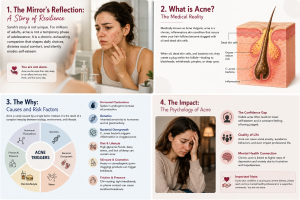
Acne is rarely caused by a single factor. Instead, it is the result of a complex interplay between biology, environment, and lifestyle. Understanding these triggers is the first step toward effective management.
The Core Biological Triggers
Hormonal Fluctuations: This is the primary driver for many adults, particularly women. Androgens (male hormones present in both sexes) stimulate the sebaceous glands to enlarge and produce more sebum. Spikes in androgens occur during puberty, menstrual cycles, pregnancy, and conditions like Polycystic Ovary Syndrome (PCOS).
Genetics: If your parents had severe acne, you are significantly more likely to develop it as well. Genetics dictate how sensitive your oil glands are to hormonal signals and how efficiently your skin sheds dead cells.
Bacterial Overgrowth: The bacterium C. acnes thrives in the oxygen-deprived, oil-rich environment of a clogged pore. As it multiplies, it triggers an immune response, leading to the redness, swelling, and pus associated with inflammatory acne.
Environmental and Lifestyle Risk Factors
Dietary Choices: While chocolate and greasy foods are often blamed, the real culprits are usually high-glycemic index foods (sugary snacks, white bread, sodas) and, for some individuals, dairy products. These can trigger insulin spikes, which in turn stimulate oil production.
Stress: While stress does not directly cause acne, it triggers the release of cortisol and other stress hormones. These hormones can worsen existing acne by increasing inflammation and oil production.
Skincare and Cosmetics: Using heavy, oil-based makeup, hair products, or thick moisturizers can clog pores—a phenomenon known as acne cosmetica.
Friction and Pressure: Resting your chin on your hand, wearing tight headbands, or prolonged phone use against the cheek can trap heat and bacteria against the skin, triggering localized breakouts.
4. The Impact: The Psychology of Acne
The psychological impact of acne is profound and well-documented in dermatological and psychological research. Acne does not just sit on the surface of the skin; it penetrates deep into a person’s self-perception.
The Confidence Gap
Research consistently demonstrates that individuals with visible acne report significantly lower levels of self-esteem and confidence. The condition creates a constant state of self-consciousness. Many people experience a phenomenon known as the “spotlight effect,” where they feel like everyone is staring directly at their skin imperfections, magnifying their flaws in their own minds.
Quality of Life and Social Withdrawal
The burden of acne often leads to a diminished quality of life. Studies have shown that acne can cause:
Social Anxiety: Avoiding social gatherings, dates, or public speaking engagements due to fear of judgment.
Avoidance Behaviors: Turning down lights, avoiding eye contact, or hiding behind hair or clothing.
Professional Impact: Feeling less assertive in workplace environments or fearing that skin issues undermine their professional image.
The Mental Health Connection
Perhaps most importantly, chronic acne is strongly linked to higher rates of depression and anxiety. The frustration of trying treatment after treatment without success can lead to a sense of hopelessness.
Important Note: If your skin condition is causing you severe distress, anxiety, or depression, please know that you do not have to carry this burden alone. Speaking with a mental health professional or a supportive community can be just as vital to your healing journey as seeing a dermatologist.
Moving Forward
Understanding that your acne has deep roots—hormonal, genetic, and psychological—is empowering. It shifts the narrative from “I am doing something wrong” to “I am managing a complex medical condition.”
In the next part of this guide, we will break down the specific types of active acne you might be experiencing and look at the critical importance of early intervention to prevent long-term scarring.
https://shorturl.fm/sgotV
Local777casino is great when you just want to unwind. I’ve played a bunch of stuff and haven’t seen any shady stuff. Give local777casino a look if you are after something reliable
Been playing on 68jl for a while now. It’s okay, nothing too crazy, but it gets the job done. If you’re curious, take a peek: 68jl